1.877.249.7735

Archive for January, 2010

Companion Urns: Unremitting Love and Union

Friday, January 22nd, 2010

When the companionship of the one you love has weathered all storms through the years beside you, why not keep them close throughout eternity? Companion urns and double urns offer a beautiful and tasteful way to memorialize and perpetuate that love, joy, and intimacy.

Double urns and companion urns are favorites among families because they facilitate the continuation of unity throughout the ages beyond life for the remains of parents, grandparents, or you and your spouse. A companion urn is a memorial urn large enough to cradle the cremains of two people in one compartment, symbolizing the everlasting intertwining of two lives. A double urn is composed of two small compartments, allowing the loving couple to reside together, side by side, in death as they did in life.

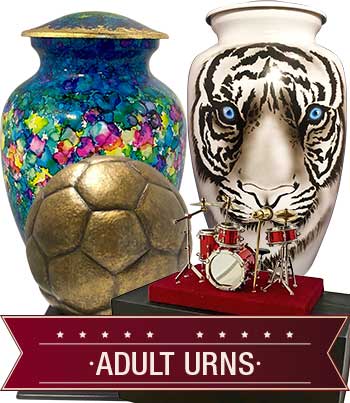
As with all cremation urns, companion urns and double urns may be handcrafted to symbolize, not only the love and togetherness of the couple, but also the traditions, passions, pastimes, or faith they enjoyed throughout their lives.

Ashes to the Wind: A Guide to Scattering Ashes

Thursday, January 21st, 2010

Scattering the cremains of a loved one can be a traditional and moving way to say farewell, but is not as simple and clean as the phrase “scattering ashes,” implies. In fact, thanks partially to inaccurate portrayals in the media, most people don’t really understand what it takes to dispose of cremated remains. If done incorrectly, rather than a moving farewell ceremony, scattering the ashes (which aren’t even really ashes) of your loved one can be an emotionally draining and unpleasant experience. To ensure that the ceremony goes well, instead of merely choosing a spot and attempting to throw the ashes to the wind, cast them carefully downwind, pour them or place the scattering urn into a trench, rake them into loose soil (as at a scattering garden), or release them from a boat or plane. Plan ahead for your ceremony and be sure to check with local authorities, such as park rangers, to make sure that it is legal to scatter ashes in the location you’ve chosen, as cremation and scattering laws vary from state to state and municipality to municipality.
Cremation Societies Simplify End-of-Life Options

Wednesday, January 20th, 2010

Cremation societies promote the acceptance of cremation as an end-of-life option, often providing cremation services themselves as well. The Cremation Society of England, founded in 1874, was the first of the modern cremation societies. It was followed in the US by the Cremation Association of North America, which is still active today in promoting and supplying cremation providers and setting educational and ethical guidelines for those providers. Many states have cremation societies as well, which function as clearinghouses for cremation information and provide memorial and cremation services. There is also a for-profit National Cremation Society with offices in 45 states, as well as the Internet Cremation Society, which is an online portal to various products and services associated with cremation. Most cremation societies are for-profit businesses in fact, providing valuable relief and important information to people in the midst of the most trying times of their lives.

Affordable Cremation

Tuesday, January 19th, 2010

Through the years, as traditional casket burial has become less and less affordable, cremation services have come to be seen as an appropriate option for memorializing the deceased. When comparing the cost of a cremation to the cost of a casket burial, the difference can be shocking depending on the options chosen. But an affordable cremation ceremony does not have to be an inferior funeral. Planning an affordable burial and cremation ceremony can be a rewarding, creative process, offering closure in a personalized way that brings together the loved ones of the deceased with dignity and consideration to the personal touch the ones we’ve lost brought to our world. In fact, an affordable cremation can be a very moving and beautiful ceremony as well as saving several thousands of dollars and serve as a fitting memorial to those we care about most. The money spent on the funeral should not be a measure of your love for the deceased.

A Christian Cremation

Monday, January 18th, 2010

Cremation has been practiced all over the world throughout all of recorded history, and continues to be mandated today by many South Asian religions. Although forbidden in the Christian world for centuries, cremation has slowly come to be accepted by most Christian denominations. The Bible does not expressly forbid cremation, and most Protestant faiths have long been open to the practice. Christian cremation was forbidden generally because it was thought to be an impediment to resurrection and an insult to God to destroy a creature created in His image. Today, both the Catholic Church and Protestant denominations accept the practice and acknowledge that cremation will not prevent God from resurrecting the souls of believers.

Judaism and Cremation

Friday, January 15th, 2010

Despite its near universal practice throughout human history, cremation is poorly accepted among the Orthodox Jewish community. This taboo has persisted through tradition despite the absence of explicit rejection by either the Talmud or the Tanakh (Hebrew Bible). The decision for whether cremation is a viable Jewish option depends largely on whether the beliefs of the deceased coincided primarily with Orthodox or Reform Judaism. Liberals and members of the Reform movement are generally more accepting of the practice of cremation, while conservative and Orthodox Jews see it as a desecration of the body, which is strictly forbidden. Generally speaking, cremains are allowed to be interred in a Jewish cemetery by both liberal and conservative denominations, because the final and ultimate command on this topic is that the body be buried.

Memorial Urns: A Caring Way to Remember Man’s Best Friends

Friday, January 15th, 2010

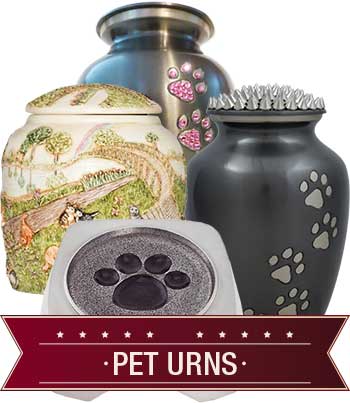
Dog memorial urns are an important part of memorializing your dog and showing respect at his passing. Although dogs are cremated as a matter of course at the veterinarian, many of the millions of dog owners in America want to do more to remember their companions. For these people, a memorial ceremony and a memorial urn can be a valuable and moving tribute to their animal companions. Allowing your child to assist in the planning of the ceremony and choice of memorial urns can be an important way to help them gain an understanding of death and the loss of their pet, which can be as traumatic for them as the passing of a family member. The range of shapes, colors, and materials used in making your pet’s memorial urn can be almost limitless, ranging from a more traditional urn to a custom urn sculpted to resemble the dog itself, crafted to incorporate a favorite photo, or even shaped like a fire hydrant or other more whimsical form. The memorial urn can be constructed of biodegradable materials if you are concerned about protecting our natural environment for future generations of dogs and their people.

Biodegradable Urns Resolve Question of What to Do With Cremains

Friday, January 15th, 2010

Today, more and more consumers want to make sure that their last action before they leave this mortal world does not contribute to the pollution of the earth. Choosing cremation and a biodegradable urn is one way to ensure that when you decide what to do with the cremains of your loved one or pet, the choice will be green. The increase of environmental options mandates the need for consumer education regarding environmentally sound funeral and cremation choices. Biodegradable urns consume fewer resources than both traditional caskets and vaults, break down into environmentally benign components (in fact creating good compost), and can be designed specifically to replace biomass by embedding seeds in the walls of the urn. Because the materials used to fabricate biodegradable urns are required by definition to break down, they tend to be less expensive than the precious metals, rare stones, and rich woods of standard urns, reducing the overall price of the urn.

Categories Recent CommentsArchives Tags